JEE Advanced | 2015Set, Relation and FunctionHard
Question
Let g :  →
 be a differentiable functions with g(0) = 0, g′(0) = 0 and g′(1) ≠ 0. Let
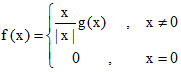
and h(x) = e|x| for all x ∈ . Let (ƒoh)(x) denote ƒ(h(x)) and (hoƒ)(x) denote h(ƒ(x)). Then which of the following is(are) true ?
→ be a differentiable functions with g(0) = 0, g′(0) = 0 and g′(1) ≠ 0. Let and h(x) = e|x| for all x ∈
. Let (ƒoh)(x) denote ƒ(h(x)) and (hoƒ)(x) denote h(ƒ(x)). Then which of the following is(are) true ?Options
A.ƒ is differentiable at x = 0
B.h is differentiable at x = 0
C.ƒoh is differentiable at x = 0
D.h of is differentiable at x = 0
Solution
(A) f(x) = 
⇒ f′(x) =
so ′A′ is right
(B) h(x) = ⇒ h′(x) =

h′(0+) = 1, h′(0-) = - 1, ∴ B is wrong
(C) f(h(x)) = g(h(x)) as h(x) > 0
z = g(e|x|) =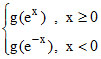
z′ =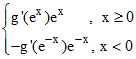
z ′(0+) = g′(1), z′(0-) = - g′(1) and g′(1) # - g′(1)
so C is wrong
(D)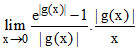
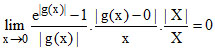
⇒ f′(x) =
so ′A′ is right
(B) h(x) =
⇒ h′(x) = h′(0+) = 1, h′(0-) = - 1, ∴ B is wrong
(C) f(h(x)) = g(h(x)) as h(x) > 0
z = g(e|x|) =
z′ =
z ′(0+) = g′(1), z′(0-) = - g′(1) and g′(1) # - g′(1)
so C is wrong
(D)
Create a free account to view solution
View Solution FreeMore Set, Relation and Function Questions
The domain of sin-1 [log3 (x/3)] is...The set ∪ is equal to -...Which of the following statement(s) is/are correct about continuous functions y = f(x) & y = g(x) ?...If w = α + iβ, where β ≠ 0 and z ≠ 1, satisfies the condition that is purely real, then the s...The domain of the function f (x) = is...