ElectrostaticsMedium
Question
The electric potential decreases uniformly from 180 V to 20 V as one moves on the X-axis from x = − 2 cm to x = + 2 cm. The electric field at the origin :
Options
A.must be equal to 40V/cm.
B.may be equal to 40V/cm.
C.may be greater than 40V/cm.
D.may be less than 40V/cm.
Solution
from given data Ex =  V/cm = 40 V/cm
but E =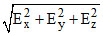 ⇒ E may be equal or greater than 40 V/cm ie.
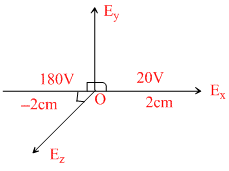
V/cm = 40 V/cmbut E =
⇒ E may be equal or greater than 40 V/cm ie. Create a free account to view solution
View Solution FreeMore Electrostatics Questions
The volume charge density as a function of distance X from one face inside a unit cube is varying as shown in the figure...Three charges q, 2q and 4q are placed on straight line at equal distances, then ratio of the force exerted by q on 4q an...A small electric dipole is of dipole moment p. The electric potential at a distance ′r′ from its centre and ...Suppose the charge of a proton and an electron differ slightly. One of them is – e, the other is (e + ∆e). If the...Choose the incorrect statement : -...