Periodic TableEasy
Question
The correct order of the decreasing radii among the following isoelectronic species is
Options
A.Ca2+ > K+ > S2- > Cl-
B.Cl- > S2- > Ca2+ > K+
C.S2- > Cl- > K+ > Ca2+
D.K+ > Ca2+ > Cl- > S2-
Solution
Ionic radii ∝ charge on anion ∝ 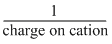
During the formation of a cation, the electrons are lost from the outer shell and the remaining electrons experience a great force of attraction by the nucleus, ie, attracted more towards the nucleus. In other words, nucleus hold the remaining electrons more tightly and this results in decreased radii.
However, in case of anion formation, the addition of electron(s) takes place in the same outer shell, thus the hold of nucleus on the electrons of outer shell decreases and this results in increased ionic radii. Thus, the correct order of ionic radii is
S2- > Cl- > K+ > Ca2+
Create a free account to view solution
View Solution FreeMore Periodic Table Questions
The number of d-electrons retained in Fe2+ (At.no.of Fe = 26) ion is...The electrongativity of the following elements increases in the order :...Which one of the following does not correctly represent the correct order of the property indicated against it?...A monoatomic anion $\left( A^{-} \right)$has 45 neutrons and 36 electrons. Atomic mass, group in the periodic table and ...Following statements regarding the periodic trends of chemical reactivity of the alkali metals and the halogens are give...