LimitsHard
Question
Let f(x) and g(x) be defined by f(x) = [x] and g(x) = 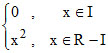 (where [.] denotes the greatest integer function), then
(where [.] denotes the greatest integer function), then Options
A. g(x) exists, but g is not continuous at x = 1
g(x) exists, but g is not continuous at x = 1B. f(x) does not exist and f is not continuous at x = 1
f(x) does not exist and f is not continuous at x = 1C.gof is continuous for all x
D.fog is continuous for all x
Solution
f(x) = [x] and g(x) = 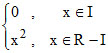
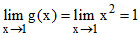 , but g(1) = 0
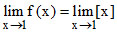 does not exist since LHL = 0 and RHL = 1
gof(x) = g([x]) = 0
⇒ gof(x) is continous for all values of x
fog(1) = 0, fog(x) = 0,
  fog(x) = 1
fog is not continous at x = 1
, but g(1) = 0does not exist since LHL = 0 and RHL = 1gof(x) = g([x]) = 0
⇒ gof(x) is continous for all values of x
fog(1) = 0,
fog(x) = 0, fog(x) = 1fog is not continous at x = 1
Create a free account to view solution
View Solution Free