Photosynthesis in Higher PlantsMedium
Question
NADP+ is reduced to NADPH in
Options
A.PS - I
B.PS - II
C.Calvin cycle
D.Non-cyclic photophosporylation
Solution
In photosynthesis during non-cyclic photophosporylation involving both PS-I and PS -II electrons released during photolysis of water are handed over to PS -II and then PS-I via a serriers. P700 of PS-I releases electron after absorbing lihht energy. This electron passes through chlorophll X, Fe-S, ferredoxin and finally to NADP+. NADP+ conbines with H+ (released during photolysis) with the help of NADP reductase to form NADPH.
NADP+ + 2e- + H+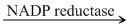 NADPH
NADPH
NADP+ + 2e- + H+
NADPHCreate a free account to view solution
View Solution Free