ProbabilityEasy
Question
A signal which can be green or red with probability  and
 respectively, is received by station A and then transmitted to station B. The probability of each station receiving the signal correctly is
 . If the signal received at station B is green, then the probability that the original signal was green is
and respectively, is received by station A and then transmitted to station B. The probability of each station receiving the signal correctly is . If the signal received at station B is green, then the probability that the original signal was green isOptions
A.
B.
C.
D.
Solution
Event G = original signal is green
E1 = A receives the signal correct
E2 = B receives the signal correct
E = signal received by B is green
P(signal received by B is green) = P(GE1E2) + P
P(E) =
P(G/E) =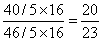
E1 = A receives the signal correct
E2 = B receives the signal correct
E = signal received by B is green
P(signal received by B is green) = P(GE1E2) + P
P(E) =
P(G/E) =
Create a free account to view solution
View Solution FreeMore Probability Questions
Suppose $m,n$ are real numbers randomly chosen in $\lbrack 0,1\rbrack$. Determine the probability that the distance betw...If A1,A2,......,An are any n events, then-...Let 0 < P (A) < 1, 0 < P (B) < 1 and P(A υ B) = P (A) + P (B) - P (A) P (B). Then -...Fifteen coupons are numbered 1, 2, ......., 15, respectively Seven coupons are selected at random one at a time with rep...In a city, a person owns independently a sedan car with probability $\frac{3}{10}$ and a SUV with probability $\frac{4}{...